System Components
Membrane
- PREPRUFE® 300R Plus membrane — heavy-duty 1.2mm grade membrane designed for horizontal and vertical use. Designed for use below slabs and on rafts (i.e. mud slabs) and for vertical blindside1 applications. Designed to accept the placing of heavy reinforcement using conventional concrete spacers
Note 1: System where membrane is placed directly against soil retention systems from where the hydrostatic head pressure will originate. Single sided self-supporting form work is then placed and concrete is then poured against membrane (between the single sided form and the membrane.)
Ancillary Components (refer to the most current Data Sheets for all system components available on gcpat.com)
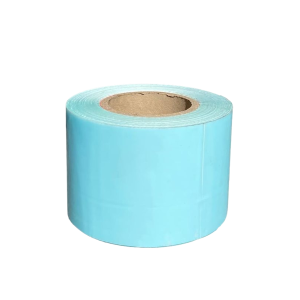
- PREPRUFE® Tape LT – low temperature tape for covering cut edges, roll ends, penetrations and detailing in cold weather
- PREPRUFE® Tape HC – high temperature tape for covering cut edges, roll ends, penetrations and detailing at elevated temperatures
- PREPRUFE® CJ Tape LT — low temperature joint tape for construction joints, and detailing in cold weather
- PREPRUFE® CJ Tape HC — high temperature joint tape for construction joints, and detailing in hot weather
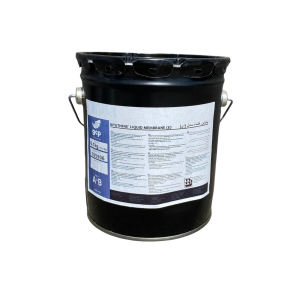
- BITUTHENE® Liquid Membrane (LM) — for sealing around penetrations, etc.
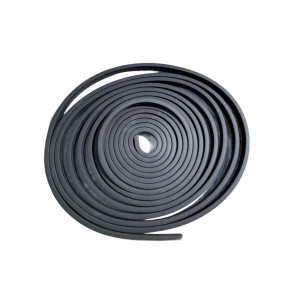
- SWELLSEAL®/ ADCOR® waterstops for joints in concrete walls and floors
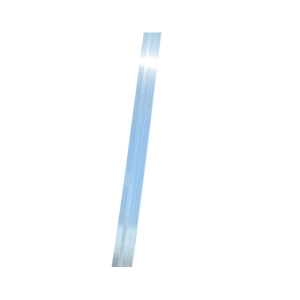
- PREPRUFE® Tieback Covers — preformed cover for soil retention wall tieback heads
- PREPRUFE® 300R Plus LT Plus – membrane is equal alternate membrane with reduced taping requirements for use at low temperatures
- RE-INJECTO™ LB – Re-injectable injection hose for non-moving concrete construction joints and penetrations
Safety and Handling
Users must read and understand the product label and Safety Data Sheet (SDS) for each system component. All users should acquaint themselves with this information prior to working with the products and follow the precautionary statements. SDSs can be obtained by contacting your local GCP representative or office and in some cases from our web site at gcpat.com.
Installation
Technical Support, Details and Technical Letters
The most up to date detail drawings and technical letters are available at gcpat.com or from your local GCP Representative. For complete application instructions, please refer to the current GCP Applied Technologies Contractor Handbook and Literature on (www.gcpat.com) or as supplied by your local GCP representative. Documents in hardcopy as well as information found on websites other than www.gcpat.com may be out of date or in error. Before using this product it is important that information be confirmed by accessing www.gcpat.com and reviewing the most recent product information, including without limitation Product Data Sheets, Contractor Manuals, Technical Bulletins, Detail Drawings and detailing recommendations. Please review all materials prior to installation of PREPRUFE® 300R Plus membrane. Where documents are not available on the GCP website contact your local GCP representative for support.
Support is also available on all matters by full-time technically trained GCP Applied Technologies field sales representatives and technical service personnel, backed by a central research and development technical services staff. For technical assistance with detailing and problem solving please contact your local in country GCP representative.
Temperature Requirements
- PREPRUFE® 300R Plus membrane can be applied at temperatures of -4°C or above. When installing PREPRUFE® Plus membrane in cold or marginal weather conditions <13°C the use of PREPRUFE® Tape LT is required at all laps and detailing. All surfaces to receive PREPRUFE® Tape LT must be clean and dry before application. LT Tape release liner must be removed immediately after application
- As an alternate, where temperatures are between -4°C and 15.5°C PREPRUFE® 300R Plus (LT) Low Temperature Membrane can be used without taping of laps. Refer to the PREPRUFE® LT Membrane data sheet for more information on cold weather application contact your local GCP representative
- PREPRUFE® 300R Plus membrane is designed for in-service temperatures below 49°C
Substrate Preparation
All surfaces – It is essential to create a sound and solid substrate to eliminate movement during the concrete pour. Substrates must be regular and smooth with no gaps or voids greater than 12 mm. Grout around all penetrations such as utility conduits, etc. for stability.
Horizontal – The substrate must be free of loose aggregate and sharp protrusions. Avoid curved or rounded substrates. When installing over earth or crushed stone, ensure substrate is well compacted to avoid displacement of substrate due to traffic or concrete pour. The surface does not need to be dry, but standing water must be removed.
Vertical – Use concrete, smooth struck shotcrete, dry sand packed structural plywood or other approved facing to sheet piling to provide support to the membrane. Board systems such as timber lagging must be close butted to provide support and not more than 12 mm out of alignment. Rapid-Drain™ drainage sheet can be used to bridge voids, gaps and out of alignment up to 50mm prior to PREPRUFE® membrane installation.
Membrane Application
PREPRUFE® 300R Plus membrane has green and blue coloured ZipStrips™ at the top and bottom of the seam area on the edge of the roll. Both ZipStrips™ cover the aggressive ZipLap™ adhesive. Once the green and blue ZipStrips™ are removed and laps brought together, a strong adhesive to adhesive ZipStrips™ bond is achieved in the overlap area. This PREPRUFE® ZipLap™ provides an enhanced sealing of the overlaps in harsh conditions combined with a fast and easy way of execution without specialized equipment, heat or power.
Horizontal substrates
PREPRUFE® 300R Plus membrane can be applied in horizontal applications to smooth prepared concrete, carton forms or well rolled and compacted earth, sand or crushed stone substrate. Kick out or roll out the membrane HDPE film side to the substrate with the green ZipStrip™, facing towards the concrete pour. End laps must be staggered to avoid a buildup of layers. Leave green and blue ZipStrips™, on the membrane until overlap procedure is completed. When completed remove green and blue ZipStrips™ to form the ZipLap™ to bond the two sheets of membrane together. Do not install over carton forms or other non-water resistant, crushable substrates.
Accurately position succeeding sheets to overlap the previous sheet 75 mm along the marked selvedge with the blue ZipStrip™, on top of the green ZipStrip™. Ensure the underside of the succeeding sheet is clean, dry and free from contamination before attempting to overlap. Peel back and remove both the green and blue ZipStrips™, in the overlap area to achieve an adhesive to adhesive bond at the overlap. Ensure a continuous bond is achieved without creases and roll firmly with a heavy roller.
- PREPRUFE® 300R Plus membrane can be returned up the inside face of slab formwork to attain a fully bonded system and to allow a tie in with BITUTHENE® self-adhered membrane or SILCOR® liquid applied membrane, or INTEGRITANK® membrane to all vertical structural surfaces after removal of formwork
Vertical substrates
PREPRUFE® 300R Plus membrane can be applied vertically to permanent formwork or adjoining structures. Mechanically fasten the membrane vertically using fasteners appropriate for the substrate with the green ZipStrip™, facing towards the concrete pour. The membrane may be installed in any convenient length. Fastening should be made through the selvedge within 12mm of the leading edge of the membrane using a small and low profile head fastener so that the membrane lays flat and allows firmly rolled overlaps. Accurately position succeeding sheets to overlap the previous sheet 75 mm along the marked selvedge with the blue ZipStrip™, on top of the green ZipStrip™.
Ensure the underside of the succeeding sheet is clean, dry and free from contamination before attempting to overlap. Peel back and remove both the green and blue ZipStrips™, in the overlap area to achieve an adhesive to adhesive bond at the overlap. Roll firmly to ensure a watertight seal.
Note that PREPRUFE® 300R Plus membrane must not be used with conventional two-sided formwork. (See PREPRUFE® Technical Letter TL-0013 (AP) Forming Systems For Use with PREPRUFE® Membranes).
Roll ends and cut edges
Overlap all roll ends and cut edges by a minimum 75 mm and ensure the area is clean and free from contamination, wiping with a damp cloth if necessary. Allow surface to dry and apply PREPRUFE® Tape LT* (or HC** in hot climates) centered over the lap edges and roll firmly. Immediately remove plastic release liner from the tape.
*LT denotes Low Temperature (between -4°C and +30°C)
**HC denotes Hot Climates (> +10°C)
Membrane Repair
Inspect the membrane before installation of reinforcement steel, formwork and final placement of concrete.The membrane can be easily cleaned by low pressure power washing if required. Repair damage by wiping the area with a damp cloth to ensure the area is clean and free from dust, and other contaminants and allow the membrane to dry. Repair small punctures and slices 12 mm or less by applying PREPRUFE® Tape centred over the damaged area. Repair punctures and holes larger than 12mm by applying a patch of the appropriate PREPRUFE® membrane. Extend the patch 150 mm beyond the damaged area. Seal all edges of the patch with PREPRUFE® Tape. Where exposed selvedge has lost adhesion or laps have not been sealed, ensure the area is clean and dry and cover with fresh PREPRUFE® Tape. Any areas of damaged membrane must be covered with PREPRUFE® Tape. All PREPRUFE® tapes must be rolled firmly and the tinted release liner removed.
Slices or relief cuts are overlapped and repaired by applying PREPRUFE® Tape centred over the edge of the overlap. Where it is not possible to create an overlap, repair with fresh membrane and PREPRUFE® Tape as detailed above.
Pouring of Concrete
Prior to placing concrete ensure the plastic release liner is removed from all PREPRUFE® tapes (note that PREPRUFE® 300R Plus membrane is release liner free.) The PREPRUFE® membrane surface must be free of contaminants, dirt and debris and all standing water prior to placement of the concrete.
It is required that concrete be poured within 56 days (42 days in hot climates) of placement of the membrane. Where ambient temperatures will exceed 38°C for more than a total of 7 days, concrete should be placed within 42 days of installation of the membrane. Following proper national concrete standards for placement of concrete, concrete must be placed carefully and consolidated properly to avoid damage to the membrane. Never use a sharp object to consolidate the concrete. Provide temporary protection from concrete splash over for areas of the PREPRUFE® membrane that are adjacent to the concrete pour.
It is also important that concrete mix is designed, placed and compacted properly to ensure no segregation or excessive bleeding. This is critical for achieving desired bonding between concrete and PREPRUFE® 300R Plus membrane, especially for membranes installed on vertical surfaces. Extra precautions are needed for concrete with slump values higher than 130mm as it is prone to have segregation and bleeding issues especially at lower ambient temperatures.
Removal of Formwork
A minimum concrete compressive strength of 20 N/mm2 is required prior to stripping formwork supporting PREPRUFE® membrane. Premature stripping may result in displacement of the membrane and/or spalling of the concrete.
After removal of the formwork and prior to backfilling, all exposed PREPRUFE® membrane must be protected from damage with an approved protective course.
Ancillary Products
The most current supply information for ancillary products can be found at the local sites within gcpat.com.
Physical Properties (ASTM Test Data-Typical values and EN 13967 Declared values)
| Property |
PREPRUFE® 300R Plus |
Test Method |
| Colour |
white |
|
| Thickness |
1.2 mm |
ASTM D3767 |
| Lateral Water Migration Resistance |
Pass at 71 m of hydrostatic head pressure |
ASTM D5385 1 |
| Long Term Lateral Water Migration Resistance, After 3 Years Water Immersion |
Pass at 71 m of hydrostatic head pressure |
ASTM D5385 1 |
| Low temperature flexibility |
Unaffected at -29°C |
ASTM D1970 |
| Resistance to hydrostatic head |
71 m |
ASTM D53852 |
| Elongation |
500% |
ASTM D4123 |
| Tensile strength, film |
27.6 MPa |
ASTM D412 |
| Crack cycling at -23°C, 100 cycles |
Unaffected, Pass |
ASTM C8364 |
| Puncture resistance |
1000 N |
ASTM E154 |
| Peel adhesion to concrete |
1750 N/m |
ASTM D9035 |
| Peel adhesion to concrete, After 3 years of water immersion |
1750N/m |
ASTM D 9035 (After 3 years of water immersion) |
| Lap peel adhesion |
1750 N/m |
ASTM D18766 |
| Permeance to water vapour transmission |
0.01 perms (0.6 ng/(Pa x s x m2)) |
ASTM E96, method B |
| Resistance to impact (Al board(mm)-MLV) |
≥400 |
EN 12691 |
| Durability of water tightness against ageing/degradation |
Pass |
EN 1296
EN 1928
Method B |
| Durability of water tightness against chemicals at 60kPa |
Pass |
EN 1847
Method B
EN 1928
Method B |
| Compatibility with bitumen |
Pass |
EN 1548 |
| Resistance to static loading |
≥20 Pass |
EN 12730 |